
Online Reasoning & Critical Thinking Tuition for Children
Teaching children how to think
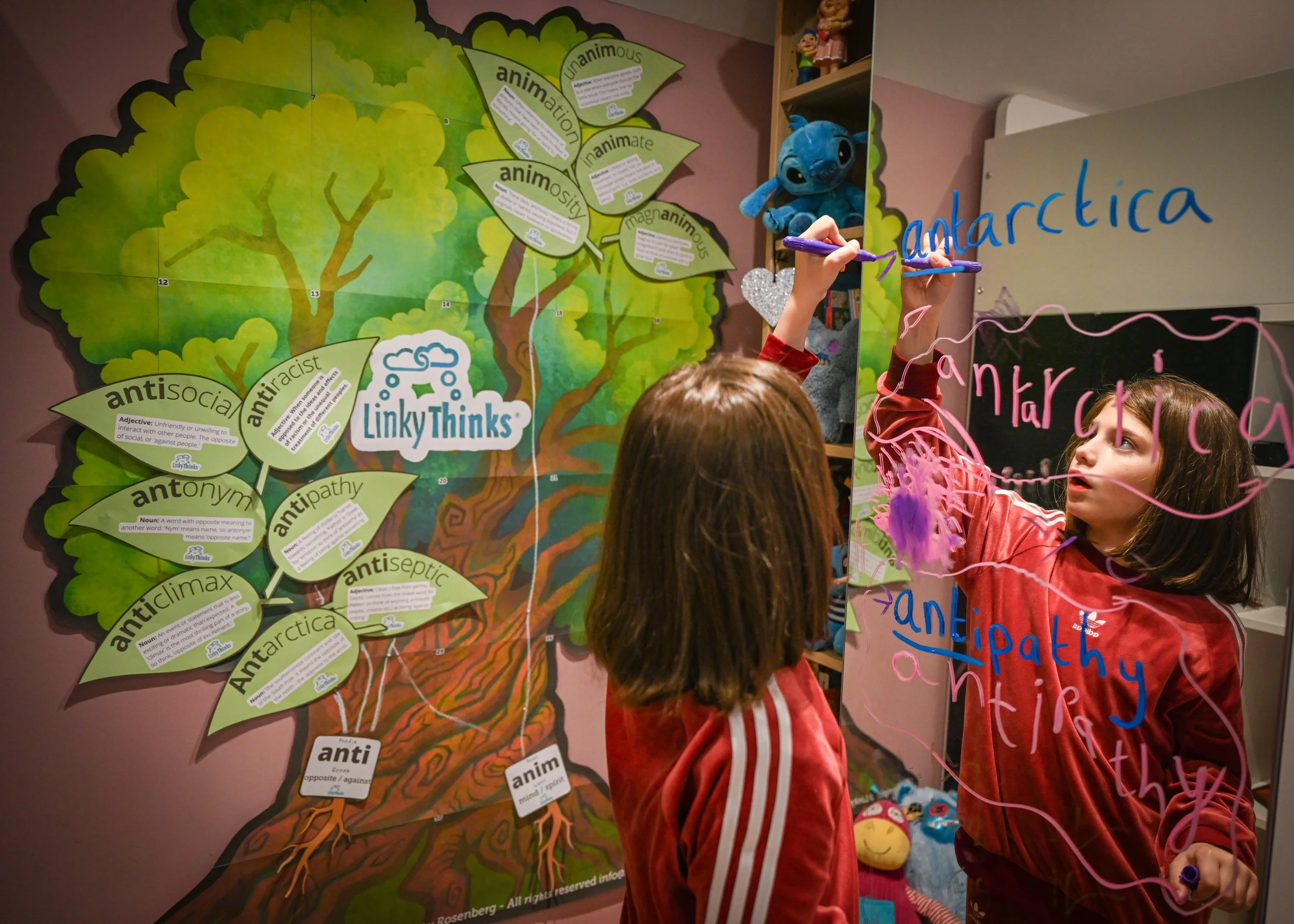
Our live, small-group classes explore verbal reasoning, non-verbal reasoning and general reasoning through puzzles, problem-solving, discussion and practical thinking exercises.
We help children develop the skills to tackle unfamiliar problems, recognise patterns, question assumptions and explain their thinking with confidence.

Years 4-6
ages 7-11

Live online
interactive group lessons

75 minutes
each week

10 weeks
per full term
Can Reasoning Skills Be Taught?
When a child struggles with reasoning questions, it's easy to assume they're simply not a logical thinker.
But spotting patterns, recognising relationships between words and working through unfamiliar problems are all skills that children can practise and develop.
Working through endless practice papers can help children become familiar with certain question types, but what happens when they're presented with something they've never seen before?
At LinkyThinks, we teach children how to break down problems, identify rules, test their assumptions and explain how they've reached an answer.
These skills are invaluable for 11+ and entrance exams, but they're also fundamental to comprehension, writing, maths and everyday decision-making.
Verbal, Non-Verbal & General Reasoning: What We Teach
Our Reasoning classes teach children practical techniques for recognising patterns, identifying relationships, applying logic and solving unfamiliar problems. Covering verbal, non-verbal and general reasoning, we develop critical thinking skills that children can apply to entrance exams, schoolwork and everyday life.

Verbal Reasoning
Explore relationships between words, vocabulary, analogies, codes and language patterns.
Develop the ability to think precisely about language and apply logic to unfamiliar verbal reasoning questions.

Non-Verbal Reasoning
Explore shapes, sequences, visual relationships, transformations and patterns.
Learn systematic methods for identifying rules and solving visual problems without relying on guesswork.

General Reasoning & Critical Thinking
Explore logical puzzles, hypothetical situations and problem-solving challenges.
Learn to consider different perspectives, evaluate information, justify decisions and question assumptions.
Every term introduces new material and writing challenges, allowing children to revisit essential techniques while continually developing their skills.
Getting the Right Answer Isn't the Whole Point
Children are often encouraged to improve their writing by adding adjectives and ambitious vocabulary. But some of the most effective writing techniques are surprisingly simple.
Take sentence rhythm, for example…
EXAMPLE VERBAL REASONING QUESTION
Which two words are closest in meaning?
Happy and birthday
Happy and joyful
Birthday and present
Joyful and excited
How do we teach children to work this out?
Ask whether the words could replace one another in a sentence without substantially changing its meaning.
"She felt happy."
"She felt joyful."
This gives children a practical method they can apply to future questions, rather than simply memorising the correct answer.
By encouraging children to explain their thinking, we help them recognise mistakes, develop their own problem-solving strategies and approach unfamiliar questions more independently.
Reasoning Skills for Exams and Everyday Life
Reasoning is involved in almost everything children do.
When they try to understand why a character behaves a certain way, decide whether an argument is convincing or work out the rules of a new game, they're using reasoning skills.
Our classes help children develop the thinking habits that underpin success in verbal and non-verbal reasoning assessments, while also becoming more thoughtful readers, articulate communicators and independent problem-solvers.
Your child doesn't need to be preparing for an entrance exam to benefit.

11+ & Entrance Exams
Approach unfamiliar question types systematically.

Communication
Explain ideas and justify opinions clearly.
Reading & Comprehension
Draw conclusions and make more thoughtful inferences.

Independent Thinking
Evaluate information and make reasoned decisions.
What Our Parents Say
Verbal, Non-Verbal & General Reasoning Classes
Tuesday Evening Classes
5:30-6:45pm (UK time)
Live online via secure Zoom link
35 lessons per academic year


What's Included?
✓ 10 live, interactive lessons
✓ 75 minutes of teaching each week
✓ Original LinkyThinks teaching materials
✓ Fresh content every term
✓ End-of-term parent feedback call
Reasoning Tuition Fees
Termly Booking
£449
per 10 week term, inc. VAT
Secure your child's place for one term at a time, without joining our monthly membership.
Future term places are subject to availability.
Tutoring Membership
£129
per month, inc. VAT
Designed for continuity throughout the academic year. Includes a reserved class place, holiday workshops, parent seminars and Downloadables access.
No payment or commitment required to join the waitlist.
Frequently Asked Questions
-
Verbal reasoning involves recognising relationships between words, language and ideas. Non-verbal reasoning involves recognising patterns and relationships between shapes, images and visual information. Our classes explore both, alongside general reasoning and critical thinking.
-
Yes. Children can practise and develop strategies for identifying patterns, applying logic, recognising relationships and solving unfamiliar problems. We teach practical methods that help children approach these challenges more systematically.
-
Yes. Our classes develop skills relevant to verbal and non-verbal reasoning assessments commonly used in selective school entrance exams, while also developing broader critical thinking and problem-solving skills.
-
Yes. Critical thinking is an important part of our reasoning programme. Children learn to evaluate information, explain decisions, consider different perspectives and approach problems independently.
-
No. Our KS2 Reasoning programme combines verbal reasoning, non-verbal reasoning and general reasoning within one weekly class
-
Class sizes vary depending on the course style, but typically capped between 10-14 children. This is the optimum class size for the LinkyThinks approach, to maximise interactivity and peer learning, while allowing each child teacher attention and plenty of opportunity for their individual contributions.
-
Join our tutoring waitlist and select KS2 Reasoning. We'll contact you when a suitable class place becomes available.
Help Your Child Become a More Independent Thinker
Develop the reasoning and critical thinking skills that children can use in exams, at school and throughout their lives.
Places are limited. No payment or commitment required to join.